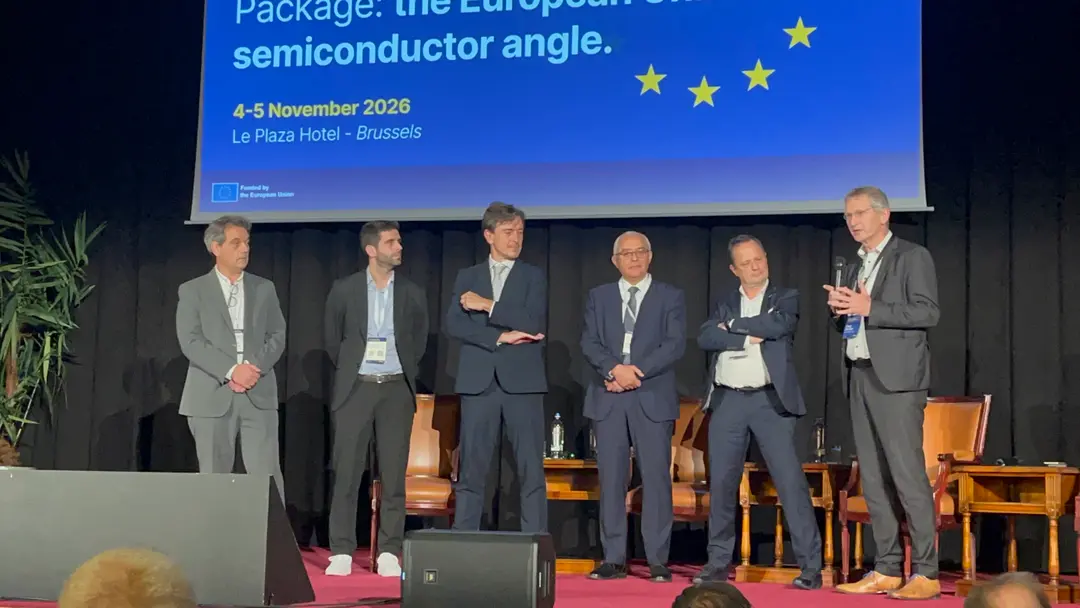
At the Quside Showcase Day 2025 – The Entropy Nexus, the intersection between space technology, cybersecurity, and quantum science took center stage.
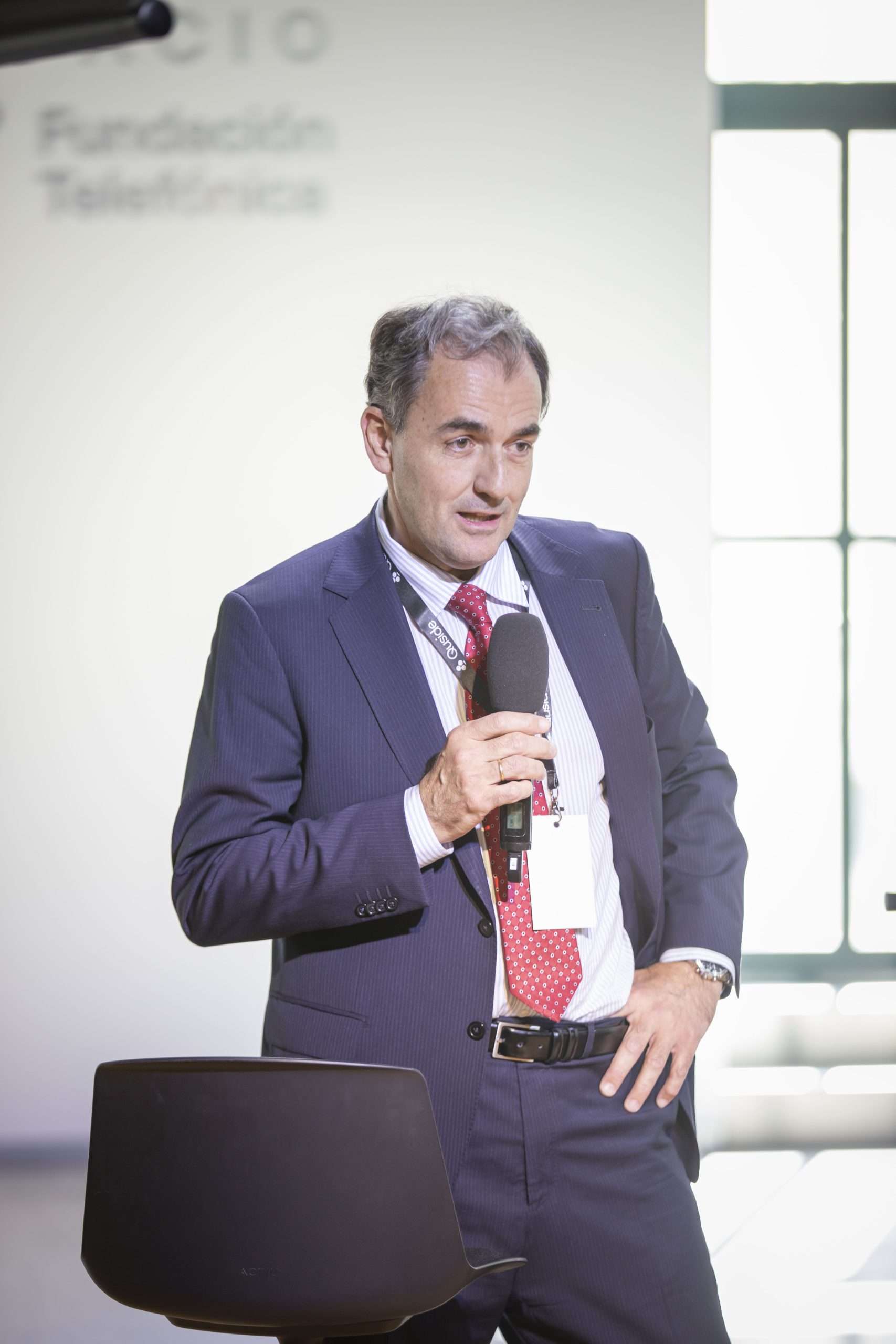
Moderated by Héctor Guerrero, Deputy Director General for Aerospace Policy and Strategy at the Spanish Ministry of Science, Innovation and Universities, the round table brought together Javier Cañizares from the Spanish Space Agency, Ángel Álvaro from Thales Alenia Space, and Demetrio Zorita from SENER Aeroespacial.
Their discussion revealed how Spain is rapidly positioning itself as a key player in quantum communications from space, blending innovation, industrial collaboration, and European partnerships to create the foundations for a quantum-secure future. Quside is contributing to both consortia, providing the cryptographic technology that will ensure the strongest security foundations for these satellites.
“We started with a dream to build a geostationary satellite capable of quantum key distribution,” said Guerrero. “Today, that dream is becoming a reality through collaboration between government, academia, and industry.”
From Vision to Orbit: The Quantum Satellite Projects
Guerrero explained that Spain’s Quantum Communications program began in 2022 as part of the PERTE Aeroespacial, supported by the Ministry of Science and the Ministry for Digital Transformation.
Despite bureaucratic and regulatory challenges, Spain decided to take an ambitious approach: two experimental missions, one in geostationary orbit (GEO) and another in low Earth orbit (LEO).
“We didn’t want to limit ourselves to one demonstration,” said Guerrero. “We’re developing both GEO and LEO missions, one led by Thales Alenia and the other by SENER, to cover all layers of a future quantum network.”
These missions will form Spain’s contribution to EuroQCI, the European Quantum Communication Infrastructure, which aims to interconnect all member states through secure quantum links.
Engineering the Quantum Network
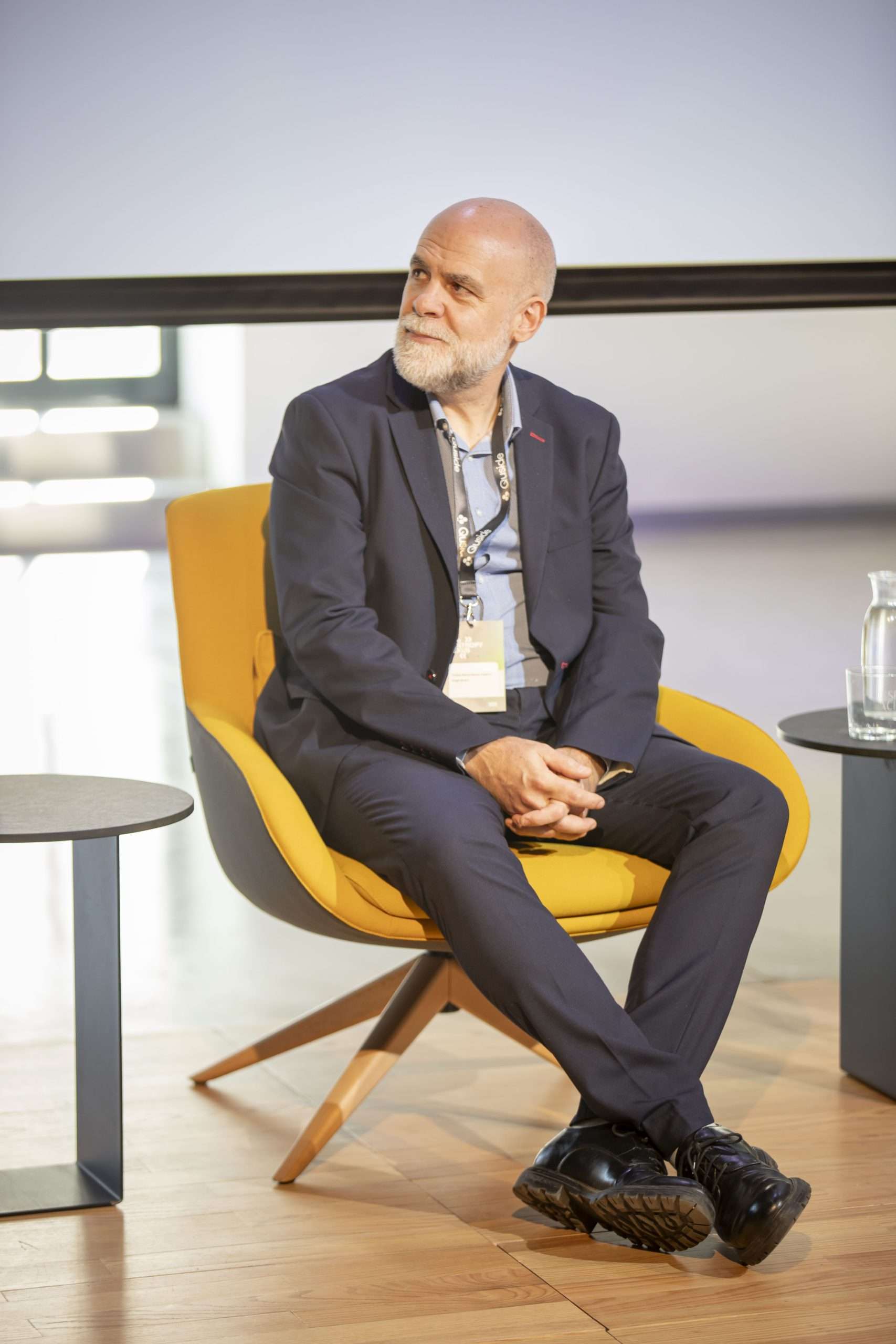
Representing Thales Alenia, Ángel Álvaro detailed the GEO mission, focused on developing an end-to-end quantum key distribution (QKD) system.
“We are going beyond what others have done,” Álvaro said. “This is not just a scientific experiment — it’s a complete system designed to deliver encryption keys from satellite to end users, including operators like Hispasat and institutions like Banco Santander.”
He explained that Spain’s approach integrates both quantum key distribution and post-quantum cryptography, ensuring cryptographic agility and redundancy.
“You never put all your eggs in one basket,” Álvaro noted. “If we rely on just one algorithm, we’re at risk. Here, we rely on physical laws — on quantum physics — and, fortunately, nobody can change those.”
Álvaro also highlighted the technical complexity of the task: sending individual photons from 36,000 km above Earth with extreme precision.
“If a photon were the size of a football, sending it from GEO to the ground would be like scoring a goal from Earth to Alpha Centauri,” he joked. “That’s the scale of what we’re doing.”
Hybrid Constellations and Holistic Security
Demetrio Zorita, from SENER Aeroespacial, explained that Spain’s LEO mission will act as a complementary backbone to the GEO network.
“We see this as a hybrid constellation — just like in telecommunications,” Zorita said. “The GEO satellites will offer stable coverage, while LEO constellations provide flexibility and resilience.”
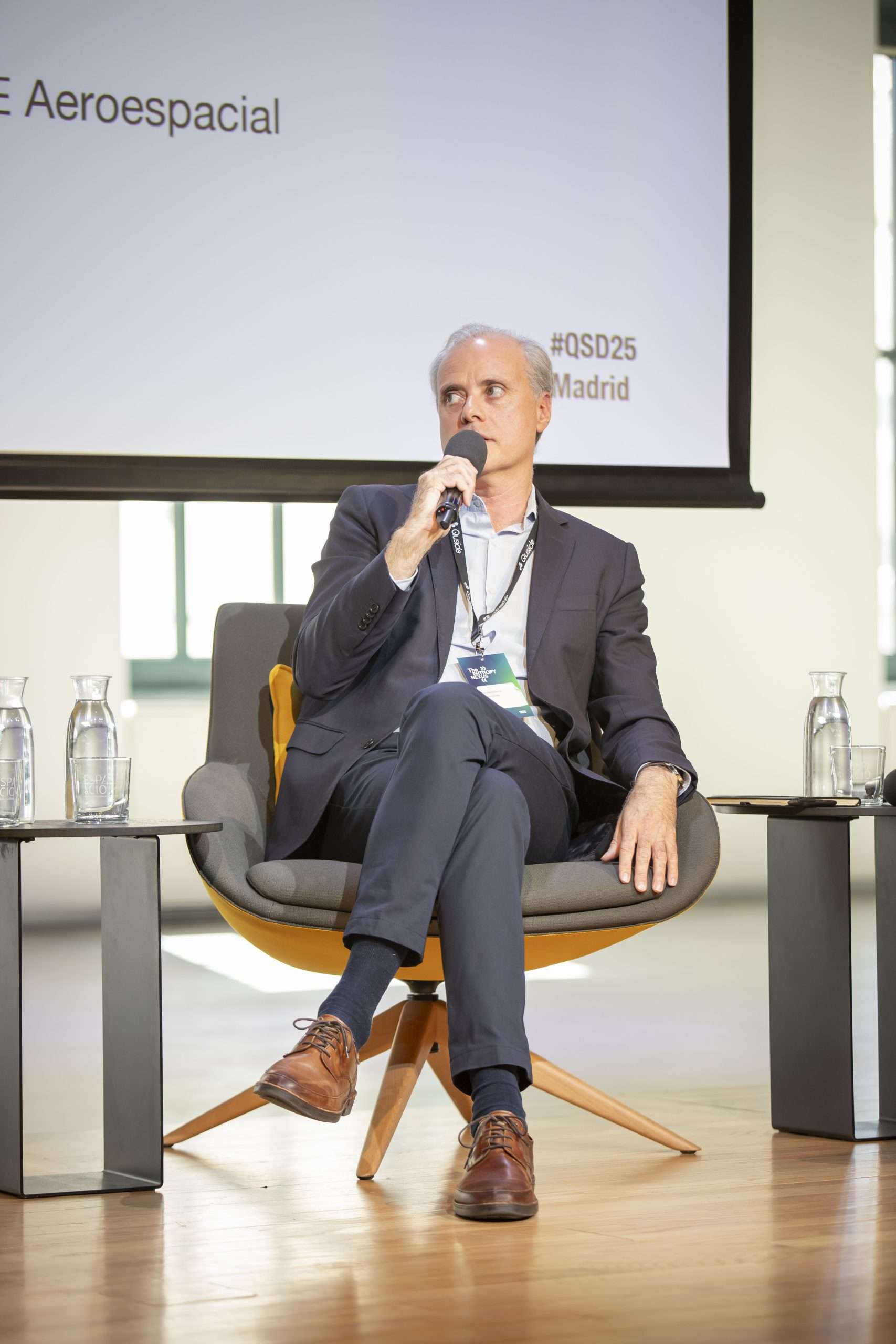
He stressed that cybersecurity must be seen as a holistic challenge, combining multiple approaches — quantum, classical, and hybrid.
“Quantum key distribution is not a silver bullet,” he warned. “It protects privacy, but not integrity or authentication. That’s why we combine it with post-quantum cryptography and other security layers.”
Zorita also addressed environmental and operational challenges, including cloud cover, photon transmission, and atmospheric turbulence, all of which require sophisticated optical pointing systems and new ground infrastructure.
“This is a revolution,” he said. “Being able to control quantum phenomena — that’s the real breakthrough. And Spain is doing it.”
Funding, Strategy, and European Collaboration
From the institutional side, Javier Cañizares of the Spanish Space Agency discussed Spain’s growing role in the European Space Agency (ESA) and its focus on quantum and optical technologies.
“Three years ago, Spain didn’t invest in quantum communications,” he recalled. “Now, after seeing the results of these projects and the growing European interest, we’ve decided to allocate more funds to optical and quantum programs.”
Cañizares noted that the upcoming ESA Ministerial Conference will define new funding for the next three years, with greater emphasis on resilience and security — areas where quantum technologies are becoming essential.
“Our job is to move faster,” he said. “Last year, we granted €90 million to accelerate industry participation — and we’ll keep supporting projects that bring quantum closer to real applications.”

A Foundation for the Quantum Internet
Closing the session, Álvaro summarized the broader vision behind these efforts:
“We fear quantum computers today, but they will need a network to speak their native language — and that’s what we’re building,” he said. “Quantum key distribution is the cornerstone of a future quantum internet. Spain is laying the foundations for it.”
The panel concluded with a clear message: Spain’s investment in quantum space communications is not just technological — it’s strategic. It represents the country’s commitment to sovereignty, resilience, and leadership in Europe’s next technological frontier.
“Going to space has always been humanity’s most ambitious endeavor,” said Guerrero. “Now, with quantum technologies, we’re going even further — into the physics of trust itself.”